
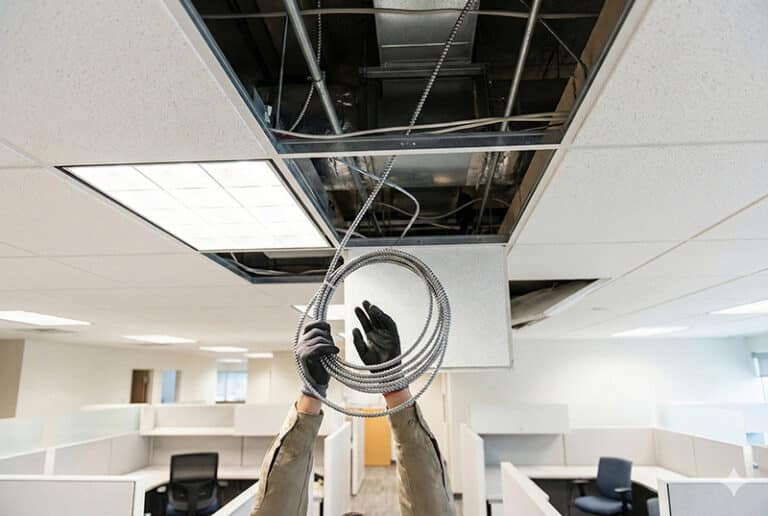
Tenant finish projects in Boulder’s office and retail spaces come with a unique set of electrical challenges. Whether you’re converting a raw shell into a bustling boutique or retrofitting an existing space for a new corporate tenant, getting the electrical work right from the start saves headaches, and money, down the road.
We’ve been helping businesses across Boulder County navigate these projects since 1979, and we’ve seen firsthand how proper electrical planning can make or break a tenant finish. From understanding local codes to coordinating with other trades, there’s a lot more involved than just running some wire and flipping a switch. Let’s walk through the key electrical considerations you’ll need to address for a successful project.
Understanding Local Electrical Codes and Permitting in Boulder
Boulder has some of the more stringent building codes in Colorado, and electrical work is no exception. The city follows the National Electrical Code (NEC) but also implements local amendments that can catch out-of-town contractors off guard. For tenant finish projects, you’ll need to secure proper permits before any electrical work begins, and yes, that includes seemingly minor modifications.
The permitting process in Boulder typically requires detailed electrical plans showing panel locations, circuit layouts, and load calculations. Inspections happen at multiple stages: rough-in (before walls are closed), and final inspection once everything’s energized. Skipping or rushing this process is a recipe for delays and costly rework.
We’ve worked within Boulder County’s code requirements for over four decades, so we know the specific requirements that apply to commercial tenant improvements. Energy code compliance is particularly important here, Boulder takes sustainability seriously, and your electrical design will need to meet strict efficiency standards. This affects everything from lighting choices to HVAC electrical connections.
One thing we always tell our clients: get your electrician involved early. Having us review your plans before you submit for permit can catch issues that might otherwise result in rejection or revision requests. It’s a simple step that can save weeks of back-and-forth with the building department.
Assessing Existing Electrical Infrastructure
Before you start dreaming about that open-concept office with task lighting at every desk or a retail showroom with dramatic accent lighting, you need to understand what you’re working with. Existing electrical infrastructure often determines what’s possible, and what’s going to cost extra.
For tenant finish projects, the first question is always: what’s already in place? Some spaces come with robust electrical systems ready to handle modern demands. Others were built decades ago when electrical needs were a fraction of what they are today. The gap between these two scenarios can mean thousands of dollars in unexpected upgrades.
Evaluating Panel Capacity and Service Requirements
The electrical panel is the heart of your space’s power system, and its capacity sets hard limits on what you can do. We start every tenant finish project by examining the existing panel, its amperage rating, available breaker spaces, and current load.
For office spaces, you’ll need to account for workstations (computers, monitors, chargers), HVAC equipment, lighting, and any specialized equipment like server rooms or break room appliances. Retail spaces have their own demands: point-of-sale systems, security equipment, display lighting, and potentially refrigeration units.
If the existing panel can’t handle your projected load, you’re looking at either a panel upgrade or adding a subpanel. In some cases, the building’s main service may need to be increased, a more involved project that requires coordination with Xcel Energy and possibly the landlord or building owner.
We provide thorough load calculations during our initial assessment, giving you a clear picture of where you stand before you commit to a design. This prevents the unpleasant surprise of discovering mid-project that your electrical system can’t support your plans.
Power Distribution Planning for Office and Retail Spaces
Smart power distribution planning is what separates a functional space from one that requires constant workarounds. You don’t want employees running extension cords across walkways or retail displays going dark because someone plugged in a space heater.
For modern offices, we typically recommend planning for more outlets than you think you’ll need. The trend toward flexible workspaces means desks move, configurations change, and what works today might not work in two years. Floor outlets, power poles, and furniture-fed systems offer flexibility that traditional wall outlets can’t match.
Retail spaces require a different approach. Power needs cluster around checkout areas, display cases, and back-of-house operations. We also plan for seasonal displays that might need temporary power and signage that requires dedicated circuits.
Dedicated circuits are essential for certain equipment. Anything with a motor (refrigeration, HVAC), high-draw appliances (commercial coffee makers, microwaves), and sensitive electronics (server equipment, POS systems) should have their own circuits. This prevents nuisance tripping and protects expensive equipment from power fluctuations.
We also consider future expansion during the planning phase. Adding circuits later means opening up finished walls, a messy, expensive proposition. Running a few extra circuits now, even if they’re capped off, gives you flexibility down the road at minimal additional cost.
Lighting Design and Energy Efficiency Standards
Lighting typically represents one of the largest electrical loads in office and retail spaces, and Boulder’s energy codes put strict limits on lighting power density. But beyond just meeting code, good lighting design can transform a space, and bad lighting can undermine even the best interior design.
LED technology has revolutionized commercial lighting, offering dramatic energy savings compared to older fluorescent systems. For tenant finish projects, we almost exclusively recommend LED solutions. The energy savings help meet Boulder’s efficiency requirements, maintenance costs are lower, and the quality of light has improved tremendously over the past few years.
Office spaces benefit from layered lighting: ambient overhead lighting supplemented with task lighting at workstations. This approach provides adequate light levels while reducing overall energy consumption. Dimmable fixtures and occupancy sensors can further reduce energy use and help meet code requirements.
Retail lighting is more specialized. Accent lighting highlights merchandise, while general lighting ensures safety and wayfinding. Track lighting systems offer flexibility to adjust as displays change. Color temperature matters too, warmer tones create an inviting atmosphere, while cooler temperatures make products look crisp and modern.
Don’t forget about emergency lighting and exit signs. Code requires battery-backup lighting that activates during power outages, illuminating exit paths. These aren’t optional, and the location requirements are specific. We ensure these elements are integrated into your overall lighting plan from the start.
Data and Communication Wiring Integration
Modern businesses run on data, and your tenant finish project needs to account for the infrastructure that makes connectivity possible. While low-voltage data cabling is technically separate from electrical work, the two systems are closely intertwined and should be planned together.
Structured cabling, the network of data cables that connect your computers, phones, security systems, and IoT devices, typically runs alongside electrical wiring. Coordinating these systems prevents conflicts and ensures both meet code requirements for separation distances.
For office spaces, we recommend planning data drops at every potential workstation location, plus additional drops for printers, conference rooms, and break areas. Wireless access points need both data and electrical connections at specific locations for optimal coverage. The trend toward Power over Ethernet (PoE) devices means some equipment, like phones and security cameras, gets both power and data through a single cable, but you still need electrical power at the network switches.
Retail spaces have their own data needs: point-of-sale terminals, inventory management systems, security cameras, and digital signage all require connectivity. Back-office areas need robust data infrastructure for business operations.
We work closely with your IT team or low-voltage contractor to coordinate pathways, ensure adequate power for networking equipment, and plan for server closets or IT rooms that may need dedicated cooling and power circuits.
Coordinating Electrical Work With Other Trades
Tenant finish projects involve multiple trades working in sequence, and sometimes simultaneously. Electrical work touches nearly every other trade, making coordination essential for keeping your project on schedule.
The relationship with HVAC is particularly important. Heating and cooling equipment needs power, thermostats need wiring, and ductwork placement affects where we can run electrical conduit. We coordinate closely with mechanical contractors to ensure both systems work together without conflicts.
Plumbing and electrical have strict separation requirements. Water and electricity don’t mix, obviously, and code mandates specific distances between electrical components and plumbing fixtures. This is especially relevant in retail spaces with restrooms or break areas.
Framing and drywall contractors need to know where electrical boxes, panels, and access points will be located. Once walls are closed, making changes gets expensive. We provide detailed layouts to framers so they can accommodate electrical needs, and we complete our rough-in before drywall crews close everything up.
The general contractor typically manages this coordination, but having an electrician who understands the full scope of tenant finish work makes the process smoother. We’ve completed countless commercial projects throughout Boulder, Lafayette, Louisville, and the surrounding areas, so we understand how these pieces fit together.
Budgeting and Timeline Considerations
Electrical work can represent 15-25% of a tenant finish project’s total cost, depending on the complexity of your needs and the condition of existing infrastructure. Getting accurate estimates early helps prevent budget surprises.
Several factors influence electrical costs:
- Existing conditions: A space with adequate panel capacity and recent wiring costs less to finish than one requiring significant upgrades
- Density of power needs: More outlets, circuits, and specialized equipment means more labor and materials
- Lighting complexity: Basic commercial fixtures cost less than elaborate retail lighting designs
- Code requirements: Meeting Boulder’s energy codes may require specific equipment or approaches
- Timeline pressure: Rush jobs cost more due to overtime and material expediting
For timeline planning, electrical work happens in phases. Rough-in electrical, running wires through framing before walls are closed, typically happens early in construction. Final electrical, installing devices, fixtures, and making final connections, happens near the end. Both phases require inspections before work can proceed.
Delays in other trades can impact electrical scheduling. If framing runs late, we can’t do rough-in on schedule. If the finish schedule compresses, electrical final may get squeezed. We build flexibility into our scheduling when possible, but the best protection against delays is realistic planning from the start.
We provide detailed, transparent estimates that break down costs by category. No hidden fees or surprise charges, that’s been our approach for over 40 years, and it’s one reason businesses across Boulder County trust us with their commercial electrical projects.
Conclusion
A successful tenant finish project in Boulder requires careful attention to electrical considerations from day one. Understanding local codes, honestly assessing existing infrastructure, and planning for both current and future needs sets the foundation for a space that works the way you need it to.
The key takeaway? Get your electrician involved early. We can identify potential issues during the planning phase when they’re easy to address, coordinate effectively with other trades, and ensure your project meets Boulder’s specific requirements without costly delays.
At Tru-Craft Electric, we’ve been helping businesses throughout Boulder County with tenant finish wiring and commercial electrical services since 1979. Our family-owned team understands the local codes, works seamlessly with general contractors and other trades, and delivers work that’s built to last. If you’re planning an office or retail tenant finish project, give us a call to schedule a free consultation. We’ll help you understand your electrical needs and develop a plan that keeps your project on time and on budget.
