If you’ve lived in Boulder long enough, you know the charm of older homes, the craftsmanship, the character, the history. But here’s the thing: that 1970s electrical panel wasn’t designed for today’s demands. Back then, nobody was plugging in electric vehicles, running home offices with multiple monitors, or asking Alexa to control the thermostat.
We see it all the time at Tru-Craft Electric. Homeowners call us because breakers keep tripping, lights flicker when the AC kicks on, or they simply can’t add another appliance without overloading a circuit. These aren’t minor inconveniences, they’re signals that your electrical system is struggling to keep up. And in a community like Boulder, where sustainability and smart technology are practically part of the lifestyle, an outdated panel can hold you back from the upgrades you actually want to make.
The good news? A panel upgrade isn’t as daunting as it sounds. With over 40 years of experience serving Boulder County, we’ve helped countless homeowners modernize their electrical systems safely and efficiently. Let’s walk through what you need to know.
Signs Your Boulder Home Needs an Electrical Panel Upgrade
How do you know when it’s time? Sometimes the signs are obvious: other times, they’re easy to dismiss as “quirks” of an older house. Here’s what we tell homeowners to watch for:
Frequent breaker trips. If you’re resetting breakers more than occasionally, your panel is telling you something. Circuits trip when they’re overloaded, it’s a safety mechanism. But if it’s happening regularly, your system simply can’t handle your current electrical load.
Flickering or dimming lights. Notice the lights dip when your refrigerator cycles on or when you run the vacuum? That’s a sign your circuits are maxed out. In older Boulder homes, this often means the panel was sized for a much simpler lifestyle.
Warm or discolored outlets and switches. This one’s serious. Heat around electrical components can indicate loose connections, overloaded circuits, or deteriorating wiring. If you notice this, call a licensed electrician immediately.
You’re still running a fuse box. Some older homes in Boulder still have fuse boxes instead of circuit breaker panels. Fuse boxes aren’t inherently dangerous, but they’re outdated, harder to maintain, and often can’t support modern electrical needs.
You’re planning major additions or upgrades. Want to install an EV charger, add a hot tub, or finish that basement? These projects require additional circuits that your current panel may not be able to accommodate.
Burning smells or visible damage. This is an emergency. Any burning odor, scorch marks, or melted components mean you need professional help right away.
Many of the homes we work on in Boulder, Lafayette, and Louisville were built decades ago with 100-amp panels, or even 60-amp in some cases. That was plenty for a few lights, a fridge, and maybe a window AC unit. Today? Not even close.
Understanding Modern Electrical Demands
Let’s talk about why older panels struggle so much with today’s homes. It comes down to simple math: we’re using more electricity than ever before, in more ways than our parents or grandparents could have imagined.
EV Chargers and Home Offices
Electric vehicles have gone from novelty to necessity for many Boulder families. But here’s what catches people off guard: a Level 2 EV charger, the kind that actually makes daily charging practical, typically requires a dedicated 40 to 50-amp circuit. That’s a significant draw, and many older panels simply don’t have the capacity to spare.
Then there’s the home office boom. Remote work isn’t going away, and a proper home office setup might include multiple monitors, a desktop computer, printers, networking equipment, and more. Add in the coffee maker and space heater, and you’ve got a room pulling serious power.
We’ve installed EV charger setups across Superior, Boulder, and the surrounding areas, and the first step is always evaluating whether the existing panel can handle the load. Often, an upgrade makes the most sense, not just for the charger, but for everything else you might want to add down the road.
HVAC Systems and Smart Home Technology
Modern HVAC systems are more efficient than their predecessors, but they also require reliable, dedicated circuits. If you’re upgrading from an old furnace to a heat pump system, something we see a lot in eco-conscious Boulder, you’ll likely need more electrical capacity.
Smart home technology adds another layer. Individually, smart thermostats, automated lighting, security systems, and voice assistants don’t draw much power. But collectively, they add up. And more importantly, they require a reliable, stable electrical system to function properly.
This is actually where something like a Span Smart Panel comes into play. Unlike traditional panels, Span gives you real-time visibility and control over your home’s energy use, down to the individual circuit level. We’re certified Span installers, and for homeowners who are integrating solar, battery storage, or EV charging, it’s a game-changer for managing modern electrical demands.
Choosing the Right Panel Size for Your Home
So you’ve decided to upgrade. The next question: how big should your new panel be?
Panel capacity is measured in amps. Here’s a general breakdown:
- 100-amp panels: Once the standard for residential homes. Today, this might work for a small home with modest electrical needs, but it’s increasingly inadequate for most households.
- 200-amp panels: This is the current standard for most residential upgrades. It provides enough capacity for modern appliances, HVAC systems, home offices, and typically one or two high-draw additions like an EV charger or hot tub.
- 400-amp panels: Reserved for larger homes or properties with exceptionally high electrical demands, think multiple EV chargers, workshop equipment, or extensive smart home systems.
Our recommendation? Don’t just plan for today. Think about what you might want in five or ten years. Upgrading to a 200-amp panel now gives you room to grow without another major electrical project down the line.
We also consider the number of circuit spaces. A panel’s amperage determines its overall capacity, but the number of available circuit slots determines how many individual circuits you can run. If you’re adding an EV charger, a hot tub, a home office, and upgraded kitchen appliances, you’ll need dedicated circuits for each.
During our consultations, we walk through your current usage, planned additions, and future possibilities. There’s no one-size-fits-all answer, but we can help you find the right balance between capacity and cost.
The Panel Upgrade Process
Understanding what’s involved helps set expectations. Here’s how we approach panel upgrades at Tru-Craft Electric.
Permits and Inspections in Boulder
Electrical panel upgrades require permits in Boulder County. Period. This isn’t bureaucratic red tape, it’s about safety. The permit process ensures that work is performed to code and inspected by qualified professionals.
We handle the permit application for you. Having worked in Boulder, Lafayette, Longmont, Westminster, Arvada, and surrounding communities for over 40 years, we know local codes inside and out. We know what inspectors look for and how to ensure your project passes on the first inspection.
Typically, there’s an initial inspection after the rough-in work and a final inspection once everything is complete. The inspector verifies that all connections are secure, the panel is properly grounded, and the installation meets current electrical codes.
Skipping permits might seem like a way to save time or money, but it creates real problems. Unpermitted electrical work can void your homeowner’s insurance, complicate future home sales, and, most importantly, put your family at risk.
What to Expect During Installation
A standard panel upgrade usually takes one full day, though more complex projects may require additional time. Here’s the general flow:
Pre-installation: We’ll coordinate with your utility company if needed. Some upgrades require the utility to disconnect and reconnect the main service line.
Power outage: Your home will be without power during most of the installation. We recommend planning accordingly, charge your devices, know where your flashlights are, and consider timing the project when it’s least disruptive.
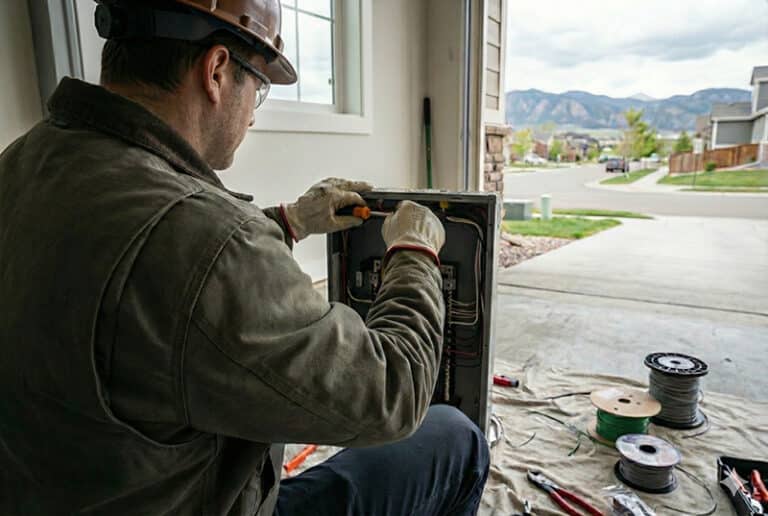
Old panel removal: We disconnect and remove the existing panel, inspecting the wiring and connections as we go.
New panel installation: The new panel is mounted, and all circuits are connected. We test each circuit individually to ensure proper function.
Final testing and walkthrough: Before we leave, we verify everything works correctly and walk you through your new panel. If you’ve opted for a Span Smart Panel, we’ll help you set up the app and show you how to monitor and control your home’s energy use.
We treat your home with respect, covering work areas, cleaning up thoroughly, and minimizing disruption to your daily life.
Costs and Considerations for Boulder Homeowners
Let’s talk money. Panel upgrades are a significant investment, and you deserve to understand what influences the cost.
Panel capacity: A 200-amp upgrade typically costs more than a 100-amp replacement, simply because the equipment is larger and the installation more involved.
Service entrance upgrades: If your home’s main service line from the utility can’t support the new panel capacity, you may need a service entrance upgrade. This adds cost but is sometimes necessary for older homes.
Wiring condition: If we discover outdated or damaged wiring during the upgrade, addressing it adds to the project scope. Aluminum wiring, knob-and-tube wiring, or deteriorated insulation are common findings in older Boulder homes.
Smart panel options: Choosing a Span Smart Panel instead of a traditional panel increases the upfront cost but provides significant long-term benefits, especially if you’re integrating solar, battery storage, or want detailed control over your home’s energy use.
Permit fees: These vary by municipality but are typically a few hundred dollars.
At Tru-Craft Electric, we provide transparent, upfront pricing with no hidden fees or surprise charges. We offer free consultations where we assess your current system, discuss your goals, and provide a detailed estimate before any work begins.
Is a panel upgrade worth it? We think so. Beyond the immediate benefits, no more tripped breakers, capacity for the upgrades you want, a modern electrical panel adds value to your home. It’s an investment in safety, convenience, and future-proofing your property.
And honestly, there’s peace of mind in knowing your electrical system can handle whatever you throw at it. Want to add solar panels next year? No problem. Thinking about a second EV? You’re covered. That flexibility matters.
Conclusion
Older Boulder homes have a lot going for them. But their electrical systems? Those often need some help catching up to modern life.
If your breakers trip regularly, you’re planning major upgrades, or you just want the capacity to grow without worrying about overloading circuits, a panel upgrade is one of the smartest investments you can make. It’s not just about fixing a current problem, it’s about positioning your home for the next decade of electrical demands.
We’ve been Boulder County’s trusted electricians since 1979, and we’ve seen electrical technology evolve dramatically over those four decades. What hasn’t changed is our commitment to safe, code-compliant work and treating every home like it’s our own.
If you’re curious whether your panel is up to the task, or you’re ready to upgrade, give us a call at Tru-Craft Electric. We’ll provide a free consultation, evaluate your current system, and help you determine the best path forward. Whether that’s a straightforward 200-amp upgrade or a full Span Smart Panel installation with solar integration, we’ve got the expertise to do it right.
Your Boulder home deserves an electrical system that works as hard as you do.
