If you’re a Boulder homeowner who’s made the switch to an electric vehicle, or you’re planning to, one of the first decisions you’ll face is how to charge it at home. And while plugging in might seem straightforward, the reality is that not all EV chargers are created equal. The difference between a Level 1, Level 2, and smart charger can mean the difference between waiting all weekend for a full battery or waking up every morning with a fully charged vehicle ready to tackle I-70 or cruise down Pearl Street.
We’ve helped homeowners across Boulder County navigate this decision for years, and we know firsthand how confusing the options can seem. Between varying installation requirements, different charging speeds, and a range of smart features, it’s easy to feel overwhelmed. That’s why we’ve put together this comprehensive guide to break down your EV charger options, so you can make a confident choice that fits your lifestyle, your home’s electrical capacity, and your budget.
Understanding EV Charging Levels
Before we jump into specific charger types, let’s clear up what “levels” actually mean. EV charging levels refer to the power output and, so, how fast your vehicle’s battery charges. The classification system was established by the Society of Automotive Engineers (SAE), and it applies universally across electric vehicles sold in the United States.
Level 1 uses a standard 120-volt household outlet, the same type you’d plug a lamp or phone charger into. Level 2 requires a 240-volt outlet, similar to what powers your electric dryer or oven. Level 3 (also called DC Fast Charging) is typically reserved for commercial charging stations and isn’t practical for residential installation due to its extreme power requirements and cost.
For Boulder homeowners, the real decision comes down to Level 1, Level 2, or a smart charger (which is essentially a Level 2 charger with advanced connectivity features). Each has distinct advantages depending on your driving habits, home electrical setup, and how much you’re willing to invest upfront.
Here in Colorado, where we experience everything from scorching summer days to frigid winter nights, charging efficiency matters even more. Cold temperatures can reduce battery range and slow charging speeds, which makes choosing the right charger level especially important for our climate.
Level 1 Chargers: The Basic Option
Level 1 chargers are about as simple as EV charging gets. Every electric vehicle comes with a Level 1 charging cable, which means you can start charging from day one without any additional equipment or installation costs. You literally plug one end into your car and the other into any standard 120-volt outlet in your garage.
Charging Speed and Practicality
Here’s the catch: Level 1 charging is slow. We’re talking about 3 to 5 miles of range per hour of charging. For perspective, if you drive 40 miles round-trip for your daily commute, you’d need roughly 8 to 13 hours of charging time to replenish that range. Leave your car plugged in overnight, and you might just barely cover a typical day’s driving.
For Boulder residents with longer commutes, say, heading into Denver for work, Level 1 charging often can’t keep up. And if you forget to plug in one night or have an unexpected trip, you could find yourself scrambling for a public charging station.
Another consideration: Level 1 chargers draw about 12 amps continuously. While that’s manageable for most home electrical systems, older Boulder homes (and we have plenty of them) may have circuits that weren’t designed for sustained loads over many hours.
Best Use Cases for Level 1
Even though its limitations, Level 1 charging makes sense in certain situations:
- Plug-in hybrids with small batteries: If you’re driving a plug-in hybrid with a 20-30 mile electric range, Level 1 can fully recharge the battery overnight without issue.
- Secondary vehicles: Got an EV that mostly sits in the garage? Level 1 is perfectly adequate for occasional use.
- Renters or temporary situations: If you’re not ready to invest in a permanent installation, Level 1 lets you charge without any modifications.
- Backup charging: Even if you install a Level 2 charger, keeping your Level 1 cable in the trunk means you can charge anywhere there’s an outlet.
For most Boulder homeowners who drive an all-electric vehicle as their primary car, though, Level 1 charging simply doesn’t provide enough juice to keep up with daily demands.
Level 2 Chargers: The Popular Choice for Home Charging
Level 2 chargers represent the sweet spot for residential EV charging, and it’s no surprise that they’ve become the go-to choice for Boulder homeowners. By tapping into a 240-volt circuit, these chargers deliver significantly more power, typically between 16 and 50 amps, depending on the unit and your home’s electrical capacity.
Installation Requirements and Costs
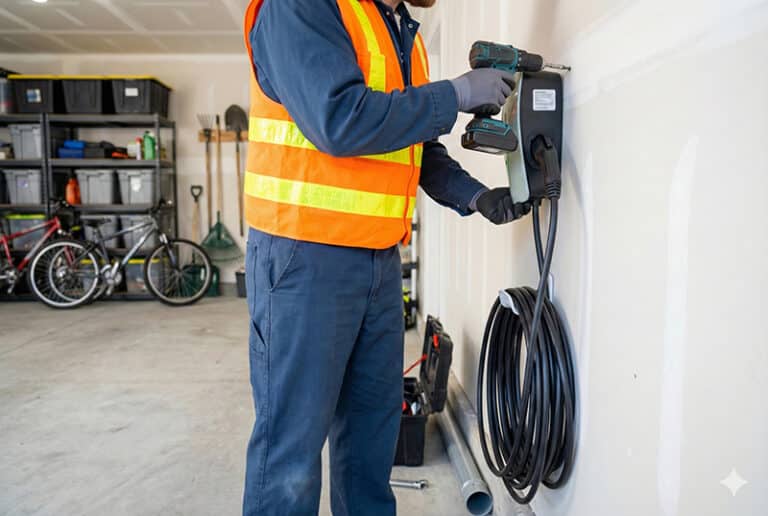
Unlike Level 1, you can’t just plug a Level 2 charger into an existing outlet. Installation requires a dedicated 240-volt circuit, which means running new wiring from your electrical panel to your garage or wherever you plan to charge. In some cases, especially in older homes, you may also need a panel upgrade to accommodate the additional load.
This is where working with a certified professional becomes essential. Boulder County has specific electrical codes and permit requirements for EV charger installations. At Tru-Craft Electric, we’ve been navigating local building codes for over 40 years, and we know exactly what inspectors look for. A proper installation ensures your charger operates safely and won’t void your home insurance or cause issues when you sell your house.
As for costs, expect to pay anywhere from $500 to $2,500 for installation, depending on factors like:
- Distance from your electrical panel to the charging location
- Whether your panel has sufficient capacity or needs an upgrade
- The amperage of the charger you select
- Permit fees and inspection requirements
The charger unit itself typically runs between $300 and $700 for a quality non-smart model. Many Boulder homeowners find that local utility rebates and federal tax credits help offset these costs significantly.
Charging Performance and Convenience
The performance difference is dramatic. A Level 2 charger delivers 12 to 30+ miles of range per hour, depending on the amperage. That means a typical overnight charge of 8 hours could add anywhere from 100 to 240 miles of range, more than enough for virtually any daily driving need.
For most EV owners, this completely changes the charging experience. You come home, plug in, and wake up to a fully charged vehicle. No more range anxiety, no more planning around public charging stations, no more worrying about whether you forgot to plug in early enough.
Level 2 chargers also handle Colorado’s cold winters better. While extreme cold still affects battery chemistry, the faster charging rate means you spend less time exposed to the elements and reach a full charge before temperatures drop further overnight.
Smart Chargers: Advanced Features for Boulder Homeowners
Smart chargers take Level 2 charging and add a layer of intelligence that’s particularly valuable for tech-savvy Boulder homeowners. These units connect to your home WiFi and offer app-based controls, energy monitoring, and integration with smart home systems.
Brands like ChargePoint, JuiceBox, Emporia, and Wallbox have become popular choices, offering varying degrees of connectivity and features. Prices range from about $400 to $900 for the unit, with installation costs similar to standard Level 2 chargers.
But the real question is: are these extra features worth it?
Energy Management and Scheduling Benefits
For Boulder homeowners, we’d argue yes, especially if you have solar panels, a battery storage system, or you’re on a time-of-use electricity rate.
Time-of-use optimization: Xcel Energy offers time-of-use rates that charge less for electricity during off-peak hours (typically overnight). A smart charger can automatically delay charging until rates drop, potentially saving you hundreds of dollars annually.
Solar integration: If you’ve invested in rooftop solar, a smart charger can prioritize charging when your panels are producing excess energy. This maximizes your self-consumption and reduces what you export to the grid at lower rates.
Load management: This is a big one. Smart chargers can communicate with your home‘s electrical system to balance loads and prevent circuit overloads. Some can even integrate with Span Smart Panels to provide circuit-level control and monitoring, something we install regularly at Tru-Craft Electric.
Usage tracking: Want to know exactly how much electricity your EV is consuming? Smart chargers log every session, giving you detailed insights into your charging habits and costs.
Remote control: Forgot to plug in before leaving the house? Check your app. Need to pause charging because you’re running high-draw appliances? A few taps handles it.
The combination of energy management and scheduling means smart chargers often pay for themselves over time through reduced electricity costs and optimized charging patterns.
Choosing the Right Charger for Your Boulder Home
So which charger is right for you? We recommend thinking through a few key questions:
What’s your daily driving distance? If you’re driving less than 30-40 miles most days and have overnight to charge, Level 1 might work. But if your commute is longer or your schedule unpredictable, Level 2 is almost certainly worth the investment.
What’s your current electrical panel capacity? Older Boulder homes, particularly those built before the 1980s, may have 100-amp or even 60-amp panels that can’t support a high-amperage Level 2 charger without an upgrade. A professional assessment can tell you exactly where you stand.
Do you have or plan to add solar? If so, a smart charger’s ability to coordinate with your solar production makes it the obvious choice.
What EV do you drive? Some vehicles can accept faster charging rates than others. A Tesla Model 3, for example, can charge at up to 48 amps on Level 2, while some older EVs max out at 32 amps or less. Matching your charger to your car’s capabilities prevents you from overspending on capacity you can’t use.
What’s your budget? If cost is a major concern, a basic Level 2 charger will serve you well for years. The smart features are nice-to-have, not need-to-have.
One more thing: don’t forget about future-proofing. If you might add a second EV down the road, many Boulder households are heading that direction, plan your electrical infrastructure accordingly now. It’s far cheaper to run additional wiring during an initial installation than to do it later.
Whatever direction you choose, make sure your installation is handled by a licensed electrician familiar with Boulder County codes. At Tru-Craft Electric, we provide free estimates for EV charger installations and can walk you through all your options based on your specific home and needs.
Conclusion
Choosing between Level 1, Level 2, and smart chargers eventually comes down to matching your charging setup to your actual lifestyle. Level 1 works fine for plug-in hybrids and low-mileage situations but falls short for daily drivers. Level 2 hits the sweet spot of speed, reliability, and cost for most Boulder homeowners. And smart chargers add valuable features, particularly energy management and scheduling, that make sense if you’re on time-of-use rates, have solar, or simply want more control over your charging.
The good news? Any of these options beats relying on public charging infrastructure alone. Having reliable home charging means you start every day with a full battery and never have to plan your errands around finding an available charger.
If you’re ready to install an EV charger at your Boulder home, or you’re not sure which option fits your situation, we’re here to help. Tru-Craft Electric has been serving Boulder County since 1979, and we’ve helped countless homeowners make the transition to electric vehicle ownership as smooth as possible. Give us a call to schedule a free consultation, and we’ll evaluate your electrical system, discuss your options, and provide transparent, upfront pricing with no surprises. Your future self (and your fully charged EV) will thank you.
