If you’ve ever plugged in your EV on a frigid Boulder morning and wondered why it’s charging at a crawl, you’re not alone. Cold weather and electric vehicles have a complicated relationship, one that catches many drivers off guard during their first Colorado winter.
We get it. You made the switch to electric for good reasons, and now you’re watching your range drop and your charging times climb as temperatures plummet. The good news? Once you understand what’s happening under the hood (or more accurately, inside your battery pack), you can take practical steps to minimize the impact. Let’s break down exactly why cold weather slows EV charging and what you can do to keep your vehicle ready for Boulder’s winter roads.
Why Cold Temperatures Slow Down EV Charging
At the heart of every EV is a lithium-ion battery pack, and these batteries are surprisingly temperature-sensitive. When temperatures drop, the chemical reactions inside the battery slow down significantly. Think of it like honey in the refrigerator, everything just moves more sluggishly.
In cold conditions, the lithium ions can’t move as freely through the electrolyte solution that separates the battery’s anode and cathode. This increased internal resistance means the battery can’t accept charge as quickly without risking damage. Your EV’s battery management system knows this, so it automatically limits charging speed to protect the cells.
For fast DC charging, this effect is even more pronounced. The high power levels of DC fast chargers can cause lithium plating on the battery’s anode when cells are cold, a permanent type of damage that reduces capacity over time. That’s why your car might cap charging speeds at 20-30 kW when it could normally handle 150 kW or more.
The bottom line: your EV isn’t broken when it charges slowly in winter. It’s protecting itself.
How Boulder’s Winter Climate Impacts Your EV Battery
Boulder’s winter climate presents some unique challenges for EV owners. While we don’t see the extreme cold of Minnesota or Montana, our high-altitude location (over 5,400 feet) combined with typical winter temperatures in the 20s and 30s creates conditions that noticeably affect battery performance.
January average lows hover around 18°F, and it’s not unusual to see single-digit temperatures during cold snaps. At these temperatures, your battery’s internal resistance can increase by 30-50% compared to optimal operating conditions around 70°F.
Boulder’s dramatic temperature swings also play a role. A sunny winter afternoon might warm things up to 45°F, only to drop 30 degrees overnight. This variability means your charging experience can differ dramatically depending on when you plug in.
And let’s not forget elevation. Thinner air at altitude means your car’s thermal management system works harder to regulate battery temperature. Combined with cold temps, this can extend the time needed to warm your battery to optimal charging temperatures.
The Real Range Loss You Can Expect in Cold Weather
Let’s talk numbers, because the range loss in cold weather often surprises new EV owners. According to studies from AAA and real-world data from EV analytics companies, you can expect to lose 20-40% of your rated range when temperatures drop below freezing.
Where does that energy go? Several places:
- Cabin heating: Unlike gas cars that use waste engine heat, EVs must generate heat electrically. Running the heater can consume 3-5 kW continuously.
- Battery conditioning: Your car uses energy to warm the battery pack for efficient operation.
- Increased rolling resistance: Cold tires and thicker lubricants in wheel bearings create more drag.
- Regenerative braking limitations: Cold batteries can’t recapture as much energy during deceleration.
In practical terms, if your EV is rated for 300 miles, you might see 180-240 miles of real range on a cold Boulder day. Plan accordingly, especially for longer trips into the mountains where temperatures drop even further.
The good news is that range improves as your battery warms up during driving. That first 15-20 minutes might be rough on efficiency, but things get better.
Preconditioning Your Battery Before Charging
Preconditioning is your best friend in cold weather. Most modern EVs have built-in features that warm the battery before charging, you just need to use them.
Here’s how it works: when you set a charging destination in your navigation system, the car automatically begins warming the battery as you approach. By the time you arrive, your battery is at optimal temperature for fast charging. This can cut charging times in half or more compared to plugging in cold.
No navigation system? Many EVs let you manually activate preconditioning through their mobile app. Start it 20-30 minutes before you plan to charge.
If your car is parked in a garage, even an unheated one, you’re already ahead. Garages typically stay 10-20 degrees warmer than outside air, which helps preserve battery temperature.
For home charging, preconditioning matters less since Level 2 charging speeds aren’t as affected by cold. But if you’re planning to hit a DC fast charger on your way to the ski slopes, preconditioning is essential. The energy you spend warming the battery pays for itself in faster charging and better battery longevity.
Smart Charging Habits for Boulder Winters
Adapting your charging routine for winter doesn’t require major lifestyle changes, just a few smart adjustments.
Charge more frequently: Don’t wait until you’re nearly empty. Keeping your battery between 20-80% helps it stay warmer and more responsive. Cold batteries at low state of charge are the worst-case scenario.
Charge immediately after driving: Your battery is already warm from use. Plugging in right after arriving home means faster charging and less energy wasted on preconditioning.
Use scheduled departure features: Most EVs let you set a departure time. The car will manage charging to finish right before you leave, and it’ll precondition the cabin and battery, all while still plugged in, using grid power instead of your battery.
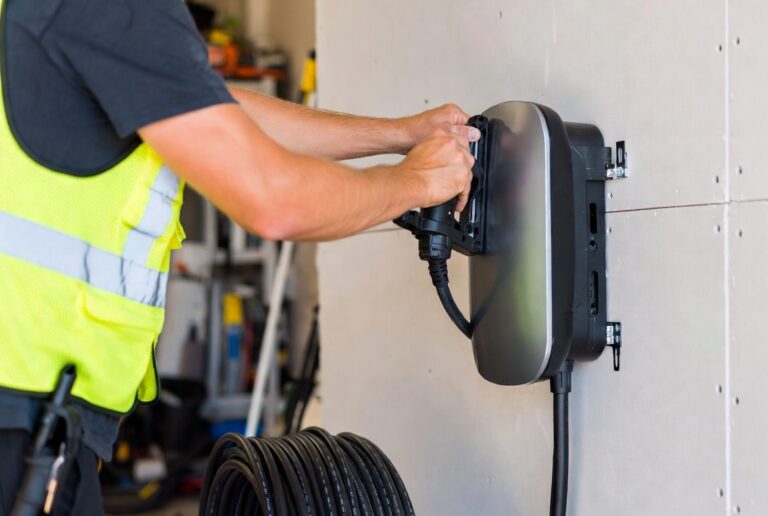
Consider Level 2 home charging: If you’ve been relying on standard 120V outlets, winter is the time to upgrade. A Level 2 charger (240V) delivers 25-30 miles of range per hour, making overnight charging reliable even in cold weather. Our team at Tru-Craft Electric handles EV charger installations throughout Boulder County, it’s one of our most requested services these days.
Don’t stress about occasional slow charges: One slow charging session won’t hurt anything. It’s consistent best practices over time that matter most.
Finding Reliable Charging Stations in Boulder During Winter
Boulder has a solid public charging infrastructure, but winter adds some considerations to station selection.
The city maintains several public charging locations, including stations at the Boulder Junction parking garage and various spots along Pearl Street. These are generally well-maintained, but outdoor chargers can occasionally have issues with frozen cables or snow-covered equipment.
For DC fast charging, you’ll find Electrify America and Tesla Supercharger stations along Highway 36 and near the Twenty Ninth Street shopping area. These stations tend to be more reliable in winter since they’re designed for high usage and are regularly serviced.
A few tips for winter charging stops:
- Check availability before you go: Apps like PlugShare show real-time station status and user reports about current conditions.
- Have a backup station in mind: If one charger is occupied or malfunctioning, you don’t want to be stranded.
- Avoid fully exposed stations when possible: Covered charging spots protect you from snow and help keep the charging equipment functioning properly.
- Report issues: If you find a broken charger, report it through the network’s app. It helps everyone.
For the most reliable experience, home charging remains king. You wake up every morning with a full battery, regardless of what the weather did overnight.
Conclusion
Cold weather will always impact EV performance, that’s just physics. But with preconditioning, smart charging habits, and realistic expectations about winter range, you can drive electric through Boulder’s winters without major headaches.
The key is working with your vehicle’s systems rather than against them. Use preconditioning, charge after driving when possible, and consider upgrading to Level 2 home charging if you haven’t already. If you need help with EV charger installation or any electrical upgrades for your Boulder County home, we’re here to help. After more than 40 years serving this community, we know how to do the job right.
